What makes a website SEO-ready? A 15-point checklist for 2026
Written by Temei · Updated · 5 min read
TL;DR
- An SEO-ready website is one that search engines can crawl and understand, and that a real person can use on a phone without waiting or pinching to zoom.
- Nine technical checks cover the machine-readable half: speed, mobile, heading order, metadata, URLs, structured data, sitemaps, canonicals and images.
- Six content checks cover the human half: one topic per page, the answer placed at the top, internal links, and business information you can actually verify.
What "SEO-ready" actually means
"SEO-ready" is not a certificate anybody issues. It is a condition: the markup is clean enough for a search engine to crawl and understand, the structure is clear enough that it knows which page covers which subject, and the experience is good enough that a real visitor stays to read.
Which means nobody can sell you "SEO-ready" as a feature with a switch. But there is a finite list of things you can check, and that list is what belongs in your handover document.
The technical checklist
- Loading speed. The three Core Web Vitals — LCP, INP and CLS — are how Google describes the loading experience. Run PageSpeed Insights on your home page and one detail page; the tool shows the passing threshold for each metric inside the report, so you do not have to memorise any numbers.
- Mobile rendering. Text readable without zooming, tap targets big enough for a thumb, and no horizontal scrollbar. Open the site on your own phone before you trust anyone's report.
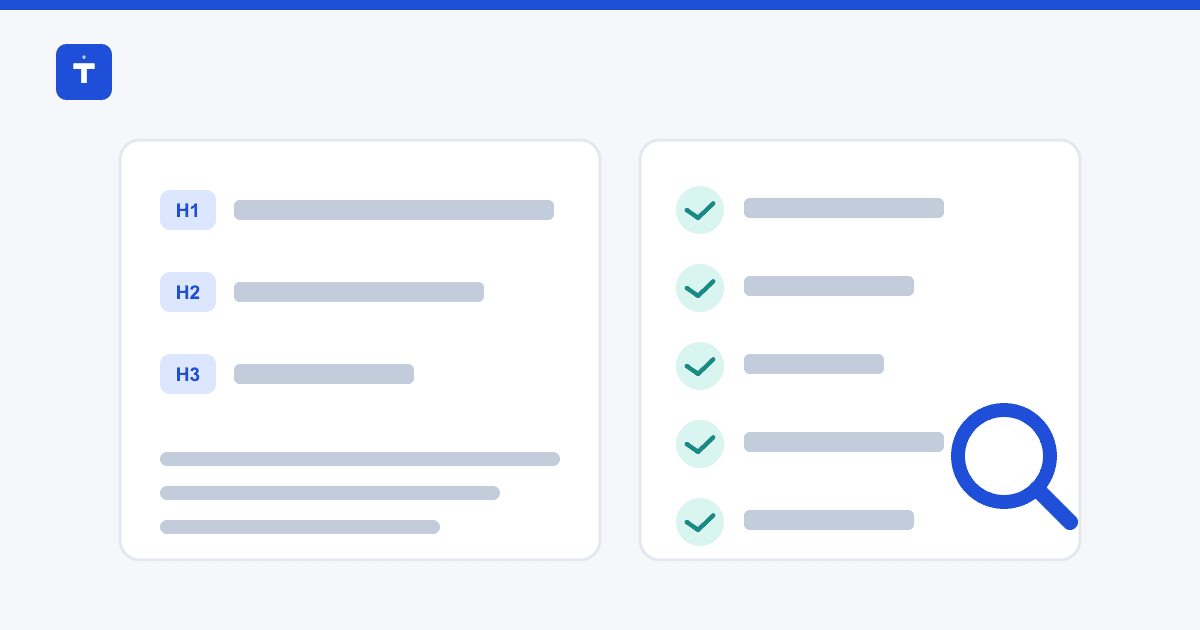
- Exactly one H1 per page, with H2s and H3s nested in real order rather than chosen for how big the text looks.
- A distinct title and meta description on every page. Two different pages sharing one title is a sign the content structure has not been thought through.
- Clean URLs. Short, hyphenated, free of stray parameters, and not changed casually. Every URL change without a redirect throws away the ranking that URL had earned.
- Structured data. Schema.org markup for the organisation, services, articles, FAQs and breadcrumbs, so a search engine knows which entity the page describes.
- Sitemap and robots. A
sitemap.xmlthat lists every page worth indexing, and arobots.txtthat is not accidentally blocking something important. - HTTPS, canonicals and hreflang. A valid certificate, a canonical declared on every page, and — if the site is bilingual — the two language versions pointing at each other correctly.
- Images. A meaningful
altattribute, sensible dimensions, and a modern lightweight format.
The content checklist
- One topic per page. If two pages target the same query, the search engine has to pick one of them to show. Merging them is how you make that choice yourself instead of leaving it to the engine.
- Put the answer directly under the heading. One short paragraph that fully answers the page's main question, before any detail. No search engine publishes a required length; 40 to 60 words is Temei's own house rule, chosen so the paragraph still stands alone when it is quoted away from the page.
- Write to the question people actually type, even when it is long and conversational. Question-shaped subheadings help both the reader and the machine find the right passage.
- Internal links. Articles point to the related service page; the service page points to pricing. Links are how you tell a search engine which pages matter.
- Show an updated date, and actually update. A pricing page stamped two years ago loses the reader's trust well before any search engine notices.
- Transparent business information. Legal name, address, phone number, policies. Publish only what you can back up: an invented achievement figure is something a customer, a competitor or a regulator can all ask you to prove.
What changes for AI search
Answer engines such as AI Overviews, ChatGPT and Perplexity do not rank ten links and let you choose; they read the page and summarise it into an answer. So the three things below are all jobs for whoever writes the content, not for whoever builds the site.
Three things are worth doing. First, put the complete answer directly under the heading, with no throat-clearing, because that is the passage an assistant reads first. Second, write sentences that stand on their own: "A landing page at Temei starts from 1,888,000₫" rather than "our prices are very competitive" — a sentence with no subject and no figure carries nothing an assistant can pass on. Third, keep your structured data and your visible content in agreement, because a contradiction between the two devalues both.
Everything else is the same SEO work as before: correct content, good speed, clear structure.
How to audit your own site for free
Four tools are enough to grade a site without hiring anyone. PageSpeed Insights gives you the three speed metrics along with their thresholds. Google Search Console tells you which pages are indexed and which ones failed. The Rich Results Test confirms whether your structured data can be read. And your own browser: open the page source and search for the h1 and title tags to check there is exactly one of each and that they describe the page honestly.
Frequently asked questions
How long before a new site appears on Google?
There is no fixed interval, and anyone promising a specific number of days is guessing. What you do control is submitting the sitemap through Search Console at handover, then watching the indexing report there to see which pages Google has found.
Do I have to pay to get indexed?
No. Indexing is free. Search advertising is a separate product and does not improve organic rankings. If somebody offers to sell you a "fee to get listed on Google", ask exactly what work that fee buys.
Does SEO-ready mean I will rank on page one?
No. Being SEO-ready only guarantees that the site is not getting in its own way. Rankings still depend on how competitive the query is, on content quality and on time. Treat this checklist as necessary rather than sufficient.
If you would rather have the technical half of that list done from day one instead of retrofitted later, the company website package from 5,000,000₫ already includes on-page SEO setup, a sitemap and schema.org markup, plus a CMS so you can keep publishing and keep the content fresh.